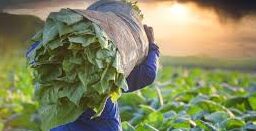
Land Preparation for Tobacco Cultivation
A Step-by-Step Procedure for Better Yield and Quality
Land preparation is a fundamental and decisive stage in tobacco cultivation. Proper preparation of the field creates favorable soil conditions that support healthy plant growth, strong root development, and high-quality leaf production. Tobacco is a sensitive commercial crop, and its performance depends greatly on soil structure, fertility, drainage, and moisture availability. Mistakes made during land preparation cannot be easily corrected later and often result in poor growth, disease incidence, and reduced yield.
Effective land preparation ensures proper aeration, uniform moisture distribution, balanced nutrient availability, and control of weeds and soil-borne pests. It also helps plants establish quickly after transplanting and grow uniformly throughout the season. This article explains in detail the process of land preparation for tobacco cultivation, covering soil requirements, field selection, tillage operations, organic manuring, leveling, moisture management, and sustainable practices for long-term soil health.
Importance of Land Preparation in Tobacco Farming
Land preparation directly influences the success of tobacco farming. A well-prepared field allows tobacco roots to penetrate deeply and spread widely, improving nutrient uptake and plant stability. Good soil conditions help in maintaining proper moisture balance and prevent waterlogging, which is harmful to tobacco plants. Proper tillage and soil management also reduce weed pressure and destroy harmful pests present in the soil.
Uniform land preparation results in even crop growth, consistent leaf size, better leaf texture, and improved curing quality. It reduces the need for corrective measures during later stages of crop growth and increases overall profitability for farmers.
Soil Requirements for Tobacco Cultivation
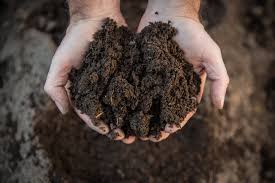
Tobacco can be grown in different soil types, but best results are obtained in soils that are light, fertile, and well drained. Sandy loam and loamy soils are ideal because they allow good aeration and easy root penetration. Heavy clay soils should be avoided unless they are well managed, as they retain excess moisture and restrict root growth.
The ideal soil pH for tobacco cultivation ranges from 5.5 to 6.5. Slightly acidic soils improve nutrient availability and contribute to better leaf quality. If soil pH is too low or too high, corrective measures such as lime or gypsum application should be undertaken during land preparation based on soil test results.
Selection of Suitable Field
Selecting the right field is the first and most important step in land preparation. The field should be well drained and free from water stagnation. Low-lying areas prone to flooding should be avoided. The selected land must receive sufficient sunlight throughout the day, as tobacco requires good light exposure for proper growth and leaf development.
Fields with a history of severe pest infestation or soil-borne diseases should not be selected. Crop rotation fields where cereals or legumes were grown previously are preferred, as they reduce disease pressure and improve soil fertility.
Clearing and Cleaning of the Field
Before tillage operations begin, the field should be properly cleared. All remnants of previous crops, weeds, stones, and plant debris must be removed. This helps in smooth ploughing and prevents pest and disease carryover. Burning of crop residues should be avoided because it destroys organic matter and beneficial soil microorganisms. Instead, residues can be composted or incorporated into the soil if suitable.
Primary Tillage Operations
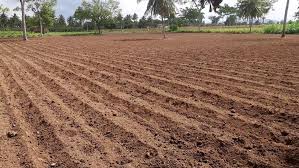
Primary tillage involves deep ploughing of the soil to loosen it and improve its physical condition. This operation is essential for breaking hard soil layers and increasing soil aeration. Deep ploughing also helps in exposing soil-borne pests and weed seeds to sunlight, thereby reducing their population.
The field should be ploughed two to three times using a mouldboard or disc plough. The recommended ploughing depth is about twenty to twenty-five centimeters. Summer ploughing is highly beneficial, as it improves soil structure and reduces pest incidence naturally.
Secondary Tillage and Soil Pulverization
After primary tillage, secondary tillage is carried out to break large soil clods and prepare a fine seedbed. This stage involves harrowing and planking operations. Harrowing helps in pulverizing the soil and mixing organic matter evenly, while planking levels the surface and removes minor undulations.
A fine and friable soil structure is essential for good root establishment and nutrient absorption. Proper secondary tillage ensures that the soil is soft enough to support young tobacco plants after transplanting.
Land Leveling and Drainage Management
Land leveling is an important aspect of tobacco land preparation. A level field ensures uniform irrigation and prevents water stagnation in low areas. Uneven land leads to poor plant growth, nutrient imbalance, and increased disease incidence.
Proper drainage channels should be created around the field to remove excess rainwater. Tobacco is highly sensitive to waterlogging, and efficient drainage is crucial for maintaining healthy plants throughout the growing season.
Application of Organic Manures
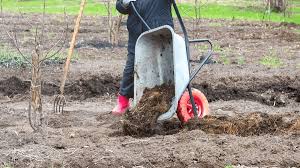
Organic manures play a vital role in improving soil fertility and structure. Farmyard manure, compost, and vermicompost are commonly used during land preparation. These organic inputs increase soil organic matter, enhance microbial activity, and improve moisture-holding capacity.
Farmyard manure should be applied at the rate of ten to fifteen tons per hectare and incorporated into the soil two to three weeks before transplanting. Proper mixing of organic manure during land preparation ensures uniform nutrient availability to plants.
Green Manuring Practices
Green manuring is an eco-friendly practice that improves soil health naturally. Crops such as sunhemp, dhaincha, or cowpea are grown and incorporated into the soil at the flowering stage. Green manuring increases nitrogen content, improves soil structure, and enhances microbial activity.
This practice reduces dependence on chemical fertilizers and supports sustainable tobacco farming by maintaining long-term soil fertility.
Soil Testing and Nutrient Management
Soil testing before land preparation helps in understanding nutrient status, pH level, and salinity problems. Based on soil test results, balanced fertilizer application can be planned. This prevents excess or deficient nutrient application and reduces cultivation costs.
Phosphorus and potassium fertilizers are generally applied as basal doses during final land preparation. Nitrogen application is usually split and applied later according to crop requirement.
Preparation of Ridges and Furrows
Tobacco is commonly transplanted on ridges and furrows. This method improves drainage, aeration, and root development. Ridges also facilitate efficient irrigation and reduce disease occurrence.
The spacing between ridges varies from ninety to one hundred twenty centimeters depending on the tobacco variety and soil type. Proper ridge preparation ensures uniform plant spacing and growth.
Moisture Management During Land Preparation
Soil moisture plays a crucial role during tillage operations. Ploughing should not be done when the soil is too dry or too wet. Excessively dry soil becomes hard and difficult to work with, while wet soil leads to compaction.
If the soil is dry, light irrigation should be given before final tillage. Maintaining workable moisture ensures good soil structure and effective land preparation.
Weed Control at Land Preparation Stage
Early weed control reduces competition for nutrients and moisture. Deep ploughing helps in uprooting weeds and burying weed seeds deep into the soil. Perennial weeds should be removed completely during land preparation.
A clean field at planting time ensures better crop establishment and reduces weed pressure during later stages.
Sustainable and Eco-Friendly Practices
Sustainable land preparation practices are increasingly important in modern tobacco cultivation. Reduced tillage, crop rotation, organic manuring, and avoidance of residue burning help in preserving soil health.
The use of biofertilizers and natural soil conditioners improves nutrient availability and supports eco-friendly farming. These practices ensure long-term productivity and environmental safety.
Common Mistakes to Avoid
Common mistakes during land preparation include poor drainage management, excessive tillage, ignoring soil testing, uneven leveling, and overuse of chemical fertilizers. Avoiding these errors helps in achieving better yield and quality.
Finally:
Land preparation is the backbone of successful tobacco cultivation. Proper soil selection, deep ploughing, organic manuring, leveling, and moisture management create ideal conditions for healthy plant growth. Well-prepared land improves root development, nutrient uptake, and uniform crop performance. By following scientific and sustainable land preparation practices, farmers can achieve higher yields, superior leaf quality, and long-term soil fertility, ensuring profitable and responsible tobacco farming.