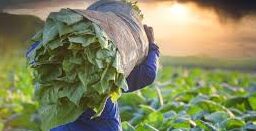
Irrigation Schedule of Tobacco Crop:
Introduction
Irrigation plays a decisive role in determining the growth, yield, and quality of the tobacco crop. Tobacco is a sensitive plant that reacts quickly to both water stress and excess moisture. An improper irrigation schedule can lead to poor leaf size, reduced leaf thickness, uneven maturity, higher disease incidence, and inferior cured leaf quality. On the other hand, a well‑planned irrigation schedule ensures uniform growth, optimum nutrient uptake, better leaf texture, and higher market value.
With increasing concerns about water scarcity and climate variability, adopting an eco‑friendly and efficient irrigation schedule for tobacco cultivation has become essential. This article provides a comprehensive, SEO‑optimized, and environmentally responsible guide on the irrigation schedule of the tobacco crop, covering crop stages, soil types, climate influence, irrigation methods, and water‑saving practices.
Water Requirements of Tobacco Crop
Tobacco is generally classified as a moderately water‑requiring crop. The total water requirement varies depending on the variety, soil type, climatic conditions, and length of the growing season. On average, tobacco requires about 500–700 mm of water during its entire growth period.
The crop is highly sensitive to moisture stress, especially during early growth and leaf expansion stages. At the same time, waterlogging is extremely harmful and can cause root rot, wilting, and poor nutrient absorption. Therefore, maintaining optimum soil moisture throughout the crop cycle is critical.
Factors Affecting Irrigation Schedule
Soil Type
Soil texture strongly influences irrigation frequency and quantity. Sandy and sandy loam soils have low water‑holding capacity and require frequent but light irrigations. Clay and clay loam soils retain moisture for longer periods and need fewer irrigations with larger intervals. Well‑drained loamy soils are considered ideal for tobacco cultivation.
Climate and Season
Temperature, rainfall, humidity, and wind speed affect evapotranspiration rates. During hot and dry periods, irrigation frequency needs to be increased, while during cool or rainy seasons, irrigation should be reduced or avoided. Tobacco grown in rabi season usually requires more irrigations than rainfed kharif tobacco.
Variety of Tobacco
Different tobacco types such as flue‑cured Virginia (FCV), burley, bidi, and chewing tobacco have varying water needs. FCV tobacco, for example, requires careful moisture management to ensure good leaf color and curing quality.
Method of Irrigation
The choice of irrigation method—flood, furrow, sprinkler, or drip—directly impacts water use efficiency. Modern methods like drip irrigation help in precise water application and reduce wastage.
Stage‑Wise Irrigation Schedule of Tobacco Crop
1. Nursery Stage
Proper irrigation during the nursery stage is essential for healthy seedling development. The nursery bed should be kept moist but not waterlogged. Light irrigation should be provided immediately after sowing to ensure uniform germination.
Watering should be done once or twice daily using a fine rose can or sprinkler, depending on weather conditions. Excess water at this stage can cause damping‑off disease, so good drainage is crucial. Eco‑friendly practices such as using mulch or shade nets help conserve moisture and reduce evaporation.
2. Transplanting Stage
At the time of transplanting, adequate soil moisture is necessary for quick establishment of seedlings. The field should be irrigated one day before transplanting to soften the soil and reduce transplant shock.
Immediately after transplanting, a light irrigation is given to ensure proper root‑soil contact. This irrigation is critical and should not be skipped. Avoid heavy irrigation at this stage, as it may lead to seedling mortality.
3. Early Vegetative Growth Stage
During the first 3–4 weeks after transplanting, tobacco plants focus on root development and initial leaf formation. Irrigation should be given at intervals of 7–10 days, depending on soil moisture and climate.
Moisture stress during this stage results in stunted growth and poor leaf initiation. However, over‑irrigation should be avoided, as it encourages shallow root development and increases disease susceptibility.
4. Leaf Expansion Stage
The leaf expansion stage is the most critical period for irrigation in tobacco cultivation. During this stage, the plant develops maximum leaf area, which directly influences yield and quality.
Irrigation should be provided at regular intervals of 5–7 days in light soils and 7–10 days in heavier soils. Soil moisture should be maintained near field capacity. Any water stress during this stage leads to smaller leaves, reduced thickness, and lower cured leaf weight.
Using soil moisture monitoring tools or simple field methods such as the feel‑and‑appearance technique helps in scheduling irrigation efficiently and sustainably.
5. Topping and Sucker Control Stage
Topping is the removal of the flower head to promote leaf growth. After topping, the water requirement of the crop slightly increases as nutrients and assimilates are diverted to leaves.
One irrigation should be given immediately after topping to support enhanced leaf growth. Subsequent irrigations should be scheduled carefully, avoiding excess moisture that can cause leaf diseases and poor quality.
6. Maturity Stage
As the crop approaches maturity, irrigation frequency should be gradually reduced. Excess water during maturity delays ripening, reduces leaf quality, and affects curing characteristics.
The last irrigation is usually given 10–15 days before harvesting, depending on soil type and weather conditions. This practice improves leaf ripeness, color, and texture while also conserving water.
Irrigation Methods for Tobacco Crop:
Furrow Irrigation
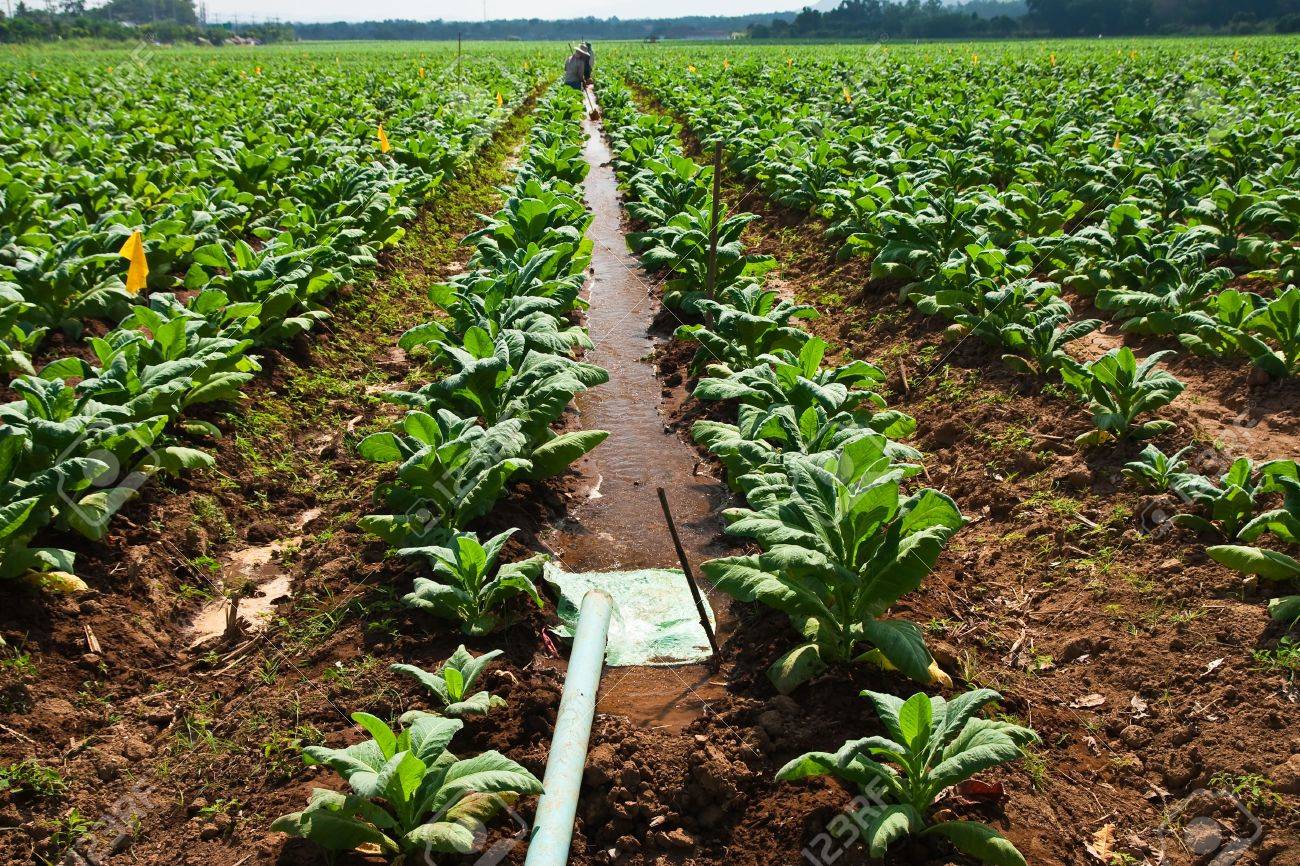
Furrow irrigation is more suitable for tobacco, as it reduces direct contact of water with plant stems and leaves. It improves water use efficiency and minimizes disease incidence compared to flooding.
 Sprinkler Irrigation
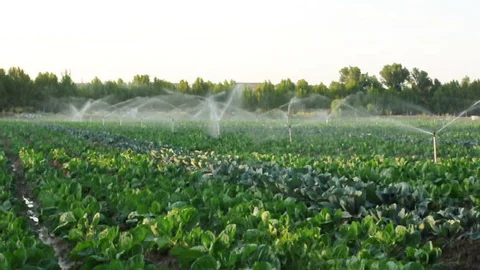 Sprinkler Irrigation
Sprinkler systems provide uniform water distribution and are suitable for sandy soils and undulating fields. However, high initial cost and evaporation losses during hot weather are limitations.
 Drip Irrigation
 Drip Irrigation
Drip irrigation is the most eco‑friendly and water‑efficient method for tobacco cultivation. It supplies water directly to the root zone, reduces evaporation losses, and allows fertigation.
Studies show that drip irrigation can save up to 30–50% water while maintaining or improving yield and quality. It also reduces weed growth and soil erosion, making it ideal for sustainable tobacco farming.
Eco‑Friendly Water Management Practices
Mulching with organic materials such as straw or crop residues helps conserve soil moisture, suppress weeds, and improve soil health. Rainwater harvesting and farm ponds can be used to store excess rainfall for supplemental irrigation.
Scheduling irrigation based on crop need rather than fixed calendar dates prevents water wastage. Integrating weather forecasts and soil moisture monitoring promotes climate‑smart agriculture.
Common Irrigation Mistakes to Avoid
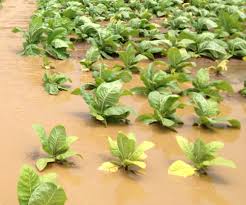
Over‑irrigation is one of the most common mistakes in tobacco farming. It leads to nutrient leaching, poor root development, and inferior leaf quality. Irregular irrigation causes stress, resulting in uneven leaf maturity.
Irrigating during peak heat hours increases evaporation losses. Irrigation should preferably be done early morning or late evening for better efficiency.