
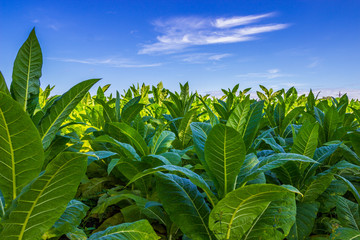
What is tobacco?
Tobacco is a leafy agricultural crop obtained from plants of the Nicotiana genus, mainly Nicotiana tabacum and Nicotiana rustica. After harvesting, the leaves are cured, processed, and aged before being used in various products. Tobacco contains nicotine, a naturally occurring stimulant that is addictive.
Tobacco has been cultivated for centuries and plays a significant role in agriculture, trade, and industry in many countries, including India.

Types of Tobacco:
Tobacco is classified based on leaf type, curing method, and end use.
1. Flue-Cured Tobacco (FCV)
FCV tobacco stands for Flue-Cured Virginia tobacco, the most common type used in cigarettes, known for its light color, sweet aroma, and high sugar/nicotine content, cured with heated air in barns to develop flavor and color, primarily grown in places like India (Andhra Pradesh, Karnataka), and heavily regulated for its production and sale.
Key Characteristics:
Flavor Profile: Mild, slightly sweet, with high tannins and sugar content.
- Appearance: Light yellow to orange-brown, thin leaves.
- Uses: Dominantly used in cigarettes, RYO (Roll-Your-Own), and MYO (Make-Your-Own) products.
Cured using hot air (flues)
Light yellow to orange leaves
Mainly used in cigarettes
Widely grown in India (Andhra Pradesh, Karnataka), Brazil and China.
Cultivation & Curing
- Harvesting: Leaves are harvested individually as they mature (priming).
- Curing: Leaves are dried using supplemental heat in enclosed barns via flue pipes (hence the name), turning them yellow/orange and developing their characteristic aroma.
- Growing Regions: Significant in India (AP & Karnataka), also grown globally.
Industry & Regulation
- Regulation: Regulated by bodies like India’s Tobacco Board to manage production, marketing, and farmer welfare.
- Market: A major export commodity, with high demand and strong farmer returns in recent years, despite challenges from taxation and illicit trade.
2. Burley Tobacco
Burley tobacco is a light, low-sugar, air-cured tobacco variety, famous in the U.S. (especially Kentucky) for blending into cigarettes, pipes, chewing tobacco, and hookah paste. It’s characterized by its tan/brown color, large leaves, and distinctive pore volume and is grown by cutting the whole stalk and hanging it in barns to cure naturally, unlike heat-cured types. Key production areas include the U.S. (Kentucky, Tennessee) and other countries like Brazil, with cultivation involving topping (removing flowers) and a long air-curing process.
Key Characteristics:
- Type: Light, air-cured tobacco.
- Sugar Content: Low.
- Color: Rich tan to brown.
- Leaf Size: Large to very large.
- Nicotine: Contains 2.0 to 4.5%.
Cultivation & Curing:
- Harvest: Whole stalks are cut, placed on sticks, and often left to wilt in the field.
- Curing: Air-cured in barns without artificial heat, a process that can take weeks.
- Main Regions: Kentucky (U.S.), Tennessee, Brazil, Malawi, Argentina, and India.
Production Notes:
- Process: After flowering, the plant is topped (flowers removed) to direct energy to leaves, then harvested.
- Challenges: Farmers face logistical and economic challenges, including changes from federal programs and stigma.
3. Oriental (Sun-Cured) Tobacco
Oriental tobacco, also known as Turkish tobacco, is a small-leafed, sun-cured variety from the Mediterranean/Balkan region (Turkey, Greece, and Bulgaria) prized for its spicy, aromatic, sweet flavor, low nicotine, and quick burn, primarily used to add complexity and aroma to cigarette and pipe tobacco blends, differing from larger Virginia/Burley types by its unique curing and small leaf structure.
Characteristics
- Flavor: Spicy, tangy, aromatic, sometimes slightly sweet or nutty.
- Appearance: Small leaves, often yellow to dark brown after curing.
- Curing: Sun-cured, drying naturally in the sun, which develops its distinct oils.
- Nicotine: Lower nicotine content than Virginia or Burley.
- Growth: Plants are smaller with many more leaves (up to 100) than other types.
Usage:
- Blending: An essential component in many cigarette and pipe tobacco blends, adding unique aroma and flavor.
- History: Historically linked to the Ottoman Empire, leading to names like “Turkish tobacco”.
- Varietals: Named after specific growing regions, such as Samsun, Izmir, and Xanthi.
Role in Blends
- Vs. Virginia: Virginia offers sweet, smooth notes; Oriental adds spicy complexity.
- Vs. Burley: Burley provides an earthy, strong body; Oriental contributes aroma and tang.
Sun-dried
Small leaves, aromatic
Used in premium cigarette blends
Common in Turkey, Greece, parts of India
4. Dark Fire-Cured Tobacco
Dark Fire-Cured Tobacco is a robust, labor-intensive tobacco variety cured by hanging leaves in barns with controlled, smoldering hardwood fires, imparting a distinctive smoky, BBQ-like flavor, dark color, and lower sugar content, primarily used for chewing tobacco, snuff, pipe blends, and some cigars. The process, common in Kentucky, Tennessee, and Virginia, involves careful fire management and results in a strong, rich product, distinct from air-cured types.
Key Characteristics:
- Flavor: Rich, smoky, sweet, and sometimes meaty notes from the hardwood smoke (hickory/oak).
- Color: Deep, dark brown to black.
- Texture: Thick, oily leaves.
- Nicotine: Higher nicotine content, as it’s generally unwashed, providing a strong “buzz”.
Production Process
- Harvest: Mature leaves are harvested when they show yellow spots and crack easily.
- Hanging: Leaves are hung in tightly built, ventilated barns.
- Curing: Slow smoldering fires of hardwood (like hickory, oak) are maintained for weeks, filling the barn with smoke and heat, carefully controlled to prevent burning.
- Fermentation (Optional): Can undergo solid-state fermentation in tanks, generating heat and ammonia for added depth, as seen in Toscano cigars.
Common Uses
- Chewing Tobacco & Snuff: A primary ingredient for its strength and flavor.
- Pipe Tobacco: Used as a condiment leaf to add body and aroma.
- Cigars: Used as filler or wrapper (fronto).
- Roll-Your-Own & Hookah: Popular in some markets for RYO and hookah blends.
Regions
- Historically and currently produced in the Kentucky-Tennessee region (the “Black Patch”) and Virginia.
6. Snuff Tobacco
Snuff tobacco is a finely ground tobacco product, available dry (inhaled) or moist (placed in mouth), delivering nicotine and causing addiction, gum disease, oral cancers, and increasing risks for heart disease and stroke, despite being smokeless. While some see it as a harm reduction tool, it’s highly addictive and carries significant health risks, including cancers of the mouth, esophagus, pancreas, and nasal passages, making it far from safe.
Types of Snuff & How It’s Used
- Dry Snuff: A powdered tobacco sniffed into the nose.
- Moist Snuff (Dipping): Placed between the gum and cheek or lip; often called “dip” or “snus” in pouch form.
- Ingredients: Contains nicotine and cancer-causing chemicals.
Health Risks
- Cancer: Oral, esophageal, pancreatic, and nasal cavity cancers.
- Addiction: Highly addictive due to nicotine.
- Oral Health: Gum disease, tooth loss, and bad breath.
- Cardiovascular: Increased risk of heart disease and stroke.
- Other: Inflammation of nasal lining, headaches, nausea, and irritability.
7. Cigar & Cigar Wrapper Tobacco
Cigars are made of three tobacco leaf parts: filler, binder, and wrapper, with the wrapper being the crucial outer leaf that dictates much of the cigar’s appearance, aroma, and flavor, often the finest quality leaf, grown under shade for softness and perfection, like Connecticut Shade (mild), Habano (spicy), or Maduro (rich, sweet). Wrapper tobacco varieties, cultivated for smoothness and color, undergo specific fermentation, influencing notes from nutty and woody (Natural) to sweet and earthy (Maduro), making them a cornerstone of a cigar’s unique character.
Key Cigar Wrapper Types & Characteristics:
- Connecticut Shade: Light brown, mild, smooth, often nutty or woody flavor; grown under shade.
- Habano: Dark brown, spicy, robust, from Nicaragua/Ecuador.
- Maduro: Dark brown to black, sweet, rich, from extended fermentation.
- Corojo: Spicy, complex, robust.
- Criollo: Earthy, sweet, peppery balance.
- Cameroon: Light to medium brown, sweet & spicy, delicate texture.
Role of the Wrapper:
- Flavor & Aroma: Influences up to 80% of the cigar’s taste and scent.
- Appearance: Provides visual appeal, choosing leaves free from blemishes.
- Burn: Affects how the cigar smokes.
Wrapper Tobacco Cultivation:
- Specialized Growing: Grown in protected environments (shade cloth) to keep leaves soft, large, and blemish-free.
- Fermentation: Meticulously cured and fermented to develop color, aroma, and texture, differentiating it from filler or binder tobacco.
Uses of Tobacco:
Although tobacco is mainly known for smoking products, it has several other uses:
1. Smoking Products
Cigarettes
Cigars
Bidis
Hookah / Sheesha
2. Smokeless Tobacco
Chewing tobacco
Gutkha
Khaini
Snuff
3. Agricultural & Industrial Uses
Nicotine extracted for insecticides (limited use today)
Used in research and pharmaceuticals
Tobacco waste used in organic compost (controlled use).
Note:Tobacco consumption is harmful to health and can cause serious health diseases. Many countries regulate its production and sale.
Economic Importance of Tobacco:
Tobacco plays a major economic role, especially in developing countries.
1. Employment Generation
Provides livelihood to millions of farmers
Supports labor in curing barns, processing units, factories, and transport
2. Contribution to Government Revenue
Generates high revenue through:
Excise duty
GST
Export taxes
Tobacco taxes contribute significantly to national income
3. Export Earnings
Tobacco and tobacco products are major export commodities
India is one of the top tobacco exporters globally
Earns valuable foreign exchange
4. Rural Development
Supports rural economies
Encourages infrastructure like warehouses, auction platforms, and transport
5. Allied Industries
Cigarette manufacturing
Paper and packaging
Logistics and warehousing
Retail trade
Conclusion:
Tobacco is a commercially important crop with significant economic benefits, especially in agriculture, employment, and exports. However, due to its harmful health effects, responsible regulation, awareness, and controlled use are essential. Balancing economic benefits with public health remains a major challenge for governments worldwide.












1 thought on “What is tobacco cultivation?”